A New Way of Thinking About Wine: Wine and the Fourth Phase of Water
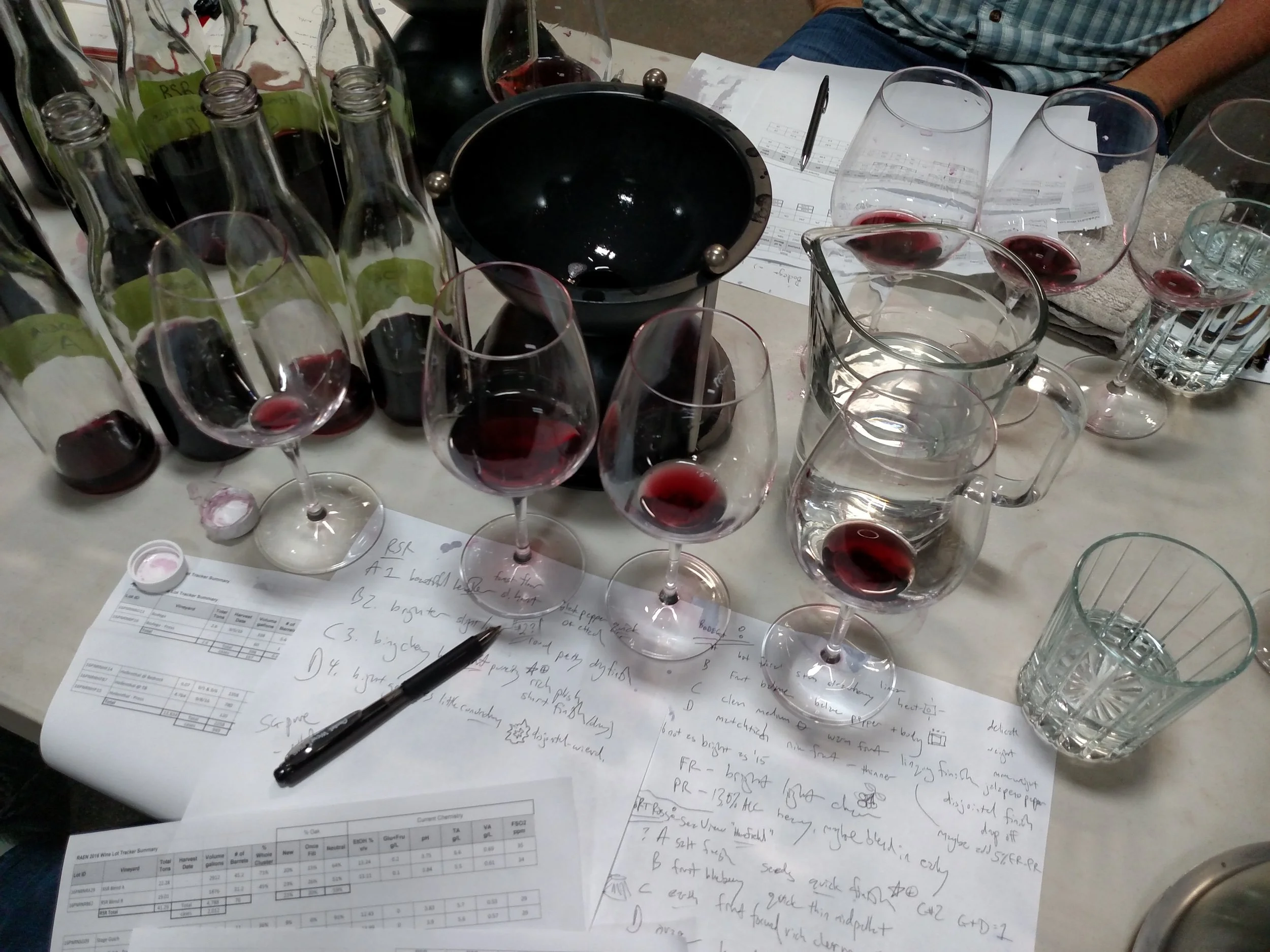
Your bottle of wine is approximately 10-15% alcohol. (Plus, a tiny percentage of complex molecules from grapes like glycerol, organic acid, carbohydrates, polyphenols, minerals, and volatile compounds.) Let’s put a pin in that. Most of the rest is water. Here’s why water matters.
WINE’S MATRIX EFFECT
Biological systems like the human body are comprised of colloidal suspensions that depend on polar charges to remain dispersed—and healthy. Wine, similarly, is a unique matrix comprised of the interaction between water, alcohol, and other colloidal compounds. The “matrix effect” describes this unique environment, which enhances the bioavailability of health-supporting, antioxidant compounds, making them more readily absorbed by the body than when present in non-alcoholic forms.
Fermentation is the fundamental chemical change of juice to wine, producing ethanol alcohol in the process. Ethanol influences the solubility and ionic interaction of compounds, affecting in turn wine’s stability and sensory properties. In grape juice, interactions are relatively straightforward, involving minerals and organic acids in a high-sugar, water-based solution. In wine, ethanol and the metabolic processes of fermentation create a far more complex environment with distinct ionic interactions. The water in wine interacts dynamically with hydrophilic (water-loving) components, like organic acids and phenolic compounds, and hydrophobic (water-repelling) components, like tannins.
Further research on the health benefits provided by the wine matrix is needed to bolster the efforts of the troubled wine industry, whose product has come under attack by neo-prohibitionists claiming that not one drop of alcohol is safe. Understanding the dynamics of water—in particular liquid crystalline water—within the wine matrix may provide a key for unlocking further evidence of wine’s health benefits at low to moderate consumption.
In order to accurately apprise the uniqueness of the wine matrix, it’s necessary—in my opinion—to consider the comparatively new field of knowledge about liquid crystalline water, the fourth phase of water discovered by Dr. Gerald Pollack PhD of University of Washington.1 His book on the subject, The Fourth Phase of Water: Beyond Solid, Liquid and Vapor,2 was published in 2013. You can find more information about his lab here: https://www.pollacklab.org.
Liquid crystalline water, also known as structured, or EZ (exclusion zone) water, is more viscous than H2O and exists as a state when water forms ordered, hexagonal, molecular lattices next to hydrophilic (water-attracting) surfaces, such as particles, changing its formula to H3O2. The hexagonal formations become negatively charged and can project millions of molecular layers away from surfaces.
Water in this organized structure (I’ll adopt Dr. Pollack’s term hereon in my essay and refer to it as EZ water) repels solutes (microscopic particles such as the polyphenols in wine), creating a negatively charged “exclusion zone” and giving a positive charge to the excluded particles. The gel-like water in the exclusion zone creates a voltage drop where it interfaces with unstructured or bulk water, and the charge separation forms a kind of battery, storing energy.
This negatively charged phase of water is the dominant phase in the human body. Dr. Stephanie Seneff, PhD of MIT believes that the sulfate molecule is responsible for the interfacial negative charge that builds and maintains the EZ in biological systems.3 Dr. Gerald Pollack points out that, while the human body is roughly 2/3 water, 99% of our molecules are water molecules; intuitively, it’s not difficult to imagine that our cells are not just bags of common water, sloshing about, but rather something more structured, charged, and capable of climbing and storing energy. It’s now understood that EZ water, which coats the interior of blood vessels, is partially responsible for moving blood throughout the circulatory system, in conjunction with the pumping action of the heart.
The fourth phase appears nearly everywhere: all that’s needed to create it is water, radiant energy from the sun, and a water-attracting surface. Natural processes create EZ water within mountain springs, glaciers, and plant cells. Snowflakes are hexagonal because they derive from the fourth phase of water. But the water coming out of your tap is not structured water, as the water molecules are randomly arranged, and it has a positive polarity.
EZ water is now being studied for its possible role in promoting good health by hydrating cells better than ordinary water. Because this form of water is negatively charged, it may support the healthy human body’s negative charge in much the same way that antioxidants keep us healthy. After all, oxidation is the process of stripping molecules of their negative charge or losing electrons. Antioxidants guard against that loss.4
Anyone who drinks wine will naturally ask an obvious question: does the water in wine ever assume a structured phase? One can imagine EZ water in the grape vine, traveling upwards through xylem via transpiration. But what about the finished product of fermentation, swirling in one’s glass? Because wine is a colloid, a mixture of water, alcohol and solutes, is it possible that an exclusion zone could form near hydrophilic solutes, pushing them away and creating both negative and positive charges in the wine? In order to create EZ water, wine would need chemical groups that could form hydrogen bonds with water molecules. Wine contains many such groups; phenols such as tannins and flavonoids; tartaric and malic acids; amino acids and peptides; hydroxyl groups from ethanol, could all form strong hydrogen bonds.
Unlike negatively charged EZ water, wine doesn't have a single overall electrical charge; it carries both positively and negatively charged particles, making it a colloid that interacts with other charged particles. This is how the process of fining, or clarifying wine, works through the addition of oppositely charged particles of bentonite clay or egg whites to attract and remove unwanted particles.
Some have theorized that the charged particles may create a mild electrical buzz on the palate that could be equated with “minerality,” a term often used to describe non-fruit flavors that are stony or minerally in a wine. Could these charges vary from wine to wine, relative to a wine’s perceived quality? If so, could they correlate to areas of EZ water in a wine? I wonder if these weak electrical charges relate to the perceived movement of a wine on the palate and the staying powers of flavor molecules on the tongue through time?
In one fascinating experiment conducted in the Pollack lab, microscopic particles were suspended in mixtures of ethanol and water, with ethanol concentrations varying from 0 to 95%. Mixtures with the highest ethanol concentrations produced the smallest and slowest to build exclusion zones, that is areas where water became structured and excluded solutes. However, an unexpected result occurred at a concentration of ~10% ethanol. At this concentration, which is very close to that of table wine, the EZ water was larger than in either pure water or almost pure ethanol.5
One wonders if the positive and negative charges created by exclusion zones in hydro-alcoholic solutions could also exist in table wine. And if so, could they have meaningful effects in the wine matrix, such as improving the bioavailability of polyphenols? This experiment dangles a tantalizing suggestion before us: could wine, a solution of ethanol and water at an ideal concentration for creating structured water, confer health benefits at low to moderate doses, due to the interaction of structured water on the human body? And this, in spite of alcohol’s known dehydrating effect as a diuretic on the human body. If so, this would be a fascinating paradox.
ZETA POTENTIAL IN HUMAN HEALTH—AND WINE
Research on EZ water and human health is an exciting, relatively new field of study. The medical practitioner and author of the popular Substack, The Forgotten Side of Medicine, has recently written a slew of posts on the subject of EZ water and treating disease. The doctor, who writes under the pseudonym A Midwestern Doctor to protect privacy, believes that EZ water is the key driver of fluid within the body. Looking through the lens of zeta potential, the author hypothesizes that unobstructed fluid circulation is key to good health and that poor zeta potential, which is similar to a diagnosis of blood stasis in Chinese medicine, is one of the top three causes of serious health issues in patients that he sees.6 A key part of his medical practice, therefore, is finding ways to restore healthy zeta potential to individual patients by increasing EZ water in their bodies.
The scientific term “zeta potential” (ζ-potential) is a new one to me; my winemaker husband, however, would understand the term when considering wine stability or when making decisions about clarifying a wine. Zeta potential measures the surface charge of particles in a liquid and how likely they are to repel each other or clump together. In a wine with weak electrostatic repulsion, or poor zeta potential, particles tend to clump and create an unstable and hazy, flawed wine.
In the human body, so argues A Midwestern Doctor, too many positive charges make fluid components like blood cells clump together, resulting in disease.7 One of the top ways to increase the production of EZ water in the body, thus restoring healthy zeta potential, is radiant energy exposure. In addition to sun exposure, possibilities include increasing anions (negative charges) in the diet and body, by drinking EZ water and electrolytes, soaking in Epsom salts, and decreasing exposure to known destroyers of EZ water such as anesthetics, glyphosate, and aluminum.8
It’s interesting to consider the anti-coagulant effects of red wine (in particular) on red blood cells through the lens of zeta potential and EZ water. Polyphenolic compounds in wine, we know, inhibit platelet aggregation and encourage the proliferation of vascular smooth muscle cells.9 Could table wine drunk at an optimal (neither too small nor too large) amount support liquid crystalline water formation and healthy zeta potential in the human body due to the anion effect?
This makes me think of a study I read in which a charged solution modeled on red wine was used to boost solar panel energy conversion from 1-3% to 9-12% by smoothing the path for electron flow in the cell in much the same way that EZ water interfaces with unstructured water in the blood, supplies endothelial cells with energy, and smooths the path for blood flow in the human circulatory system.10
Alcohol itself is also a factor in inhibiting clot formation in moderate wine drinkers.11 Wine’s matrix effect is used to describe complex interactions not present in grape juice or dealcoholized wine that provide protective benefits from polyphenols and inhibit alcohol metabolites’ carcinogenicity, as well as improving circulatory function.12 Part of that matrix is ethanol itself, which has been shown to improve the bioavailability of polyphenols, at an optimal concentration of 7.5%.13 Could the wine matrix effect be explained by zeta potential and EZ water formation?
At the Pollack Lab at University of Washington, the Pollack team decided to test known health-promoting substances to see if adding various concentrations to EZ water would expand the EZ water. The authors of the paper described their hypothesis thus: “The critical role of EZ water in cell function has led to the hypothesis that any deficiency in EZ water will impair cellular function and therefore impair health. Conversely, rebuilding of EZ water in EZ-deficient situations ought to return health toward normal.” They tested holy basil, turmeric, a probiotic, and coconut water for their effects on EZ growth. In all cases, the addition of the known “healthy” substance increased the amount of EZ water until a certain threshold was reached, in which case the size of the zone began to decrease. They also tested glyphosate, which they expected to significantly diminish EZ water, which was the case.14
The study was important in determining a link between health-enhancing substances and their ability to increase EZ water in vitro. We know that alcohol diluted in water at an optimal 10% solution was found to increase EZ water. I can’t help wishing that the Pollack team had added both red and white wine made from organically-grown grapes to their study to see if wine caused the EZ water to grow and, if so, at what concentrations, before diminishment. (Using wine made from organically-grown grapes would be key, as any trace amounts of glyphosate in the wine would skew the results.)
We sometimes forget, in this era of the demonization of wine and all alcoholic beverages, that fermentation has always been considered an excellent method for making bioactive compounds in plants, such as the flavonoids, phenols, and resveratrol in grapes, more readily available to the human body. When polyphenols from wine are metabolized, they interact with gut microbiota and are metabolized into bioavailable metabolites that typically carry a negative charge within the body. The negative charge is a result of the metabolic processes, which may involve conjugation with molecules like glucuronic acid and sulfates.15
After reading that turmeric increased EZ water in the Pollack Lab study, I began wondering what, if anything, wine and turmeric might have in common. This led me to read a study in which turmeric in both diced and extracted forms was added to grape table wine to see if the presence of wine would increase the bioavailability of health-promoting curcumin from the turmeric.
Curcuminoids are known to have antioxidant, anti-inflammatory and antimicrobial properties, and turmeric is traditionally used in Indian medicine to treat cancer, infections, diabetes, and more. However, the low bioavailability of turmeric has always been considered a challenge. In the study, the synergistic health benefits of the herbal-infused functional grape wine indeed proved that the presence of wine allowed for greater absorption of health-promoting compounds.16 Fermentation alters protein structure, surface charge, and zeta potential in ways that one would expect to impact EZ water formation. The results of a co-fermented grape and turmeric wine would be even more interesting to see.
My speculative essay ends with more questions than answers. At the very least, the fourth phase of water describes a state that is crucial for biological systems and present in wine, interacting within its complex organic matrix. Such a concept is important in thinking about wine and addressing its potential health benefits; current anti-alcohol agendas reduce wine to a carrier for alcohol (alcohol reduced to nothing but a poison) rather than a complex matrix. I would love to see research carried out on the topic of EZ water, fermentation, and the dose dependent health benefits of wine.
In 2024, while working as the managing editor of a weekly wine newsletter for a small wine communications firm, I attended a lecture and reception at the Robert Mondavi Institute for Food and Wine at the University of California, Davis. (The name of the lecture was “Nothing Left to Say? The End of Wine Writing,” and I had done the background research for it.) The reception was luxe, yet one felt a palpable sense that all was not well for the future of wine. Most event attendees, enthusiastic about wine, were retirees, not students. I thought of a recent Gallup poll that showed 40% of adults polled thought marijuana was safe to use, but only 17% thought alcohol was safe to drink.
I came away with the distinct impression that, despite the stunning buildings and endowed professorships, the Department of Viticulture and Enology faced unique challenges. Professors had to hustle for grant and private industry funding for their research and frequently ended up writing research papers on microbiology with grants from industries other than wine. Trade associations have tended to gift donations from wine auctions to local charities as an act of goodwill but have not funded research on the potential health benefits of wine.
Since 1944, the Napa Valley Vintners, for example, has donated $245 million to local Napa Valley health and education nonprofits but none to enology and viticulture research, let alone research on the health benefits of wine. Now that the bottom has fallen out of the industry, it seems late. It’s a sad irony that most health practitioners, looking to the World Health Organization for direction, will now bite the hand that feeds and tell patients that not one drop of wine is safe to drink.
My argument, in this speculative essay, as a wine lover and producer who also loves to read about science, is that there are fascinating new areas of research, such as the fourth phase of water, that could illuminate the health benefits of moderate wine drinking. I hope that the wine industry will organize and rally to financially support such cross-disciplinary research. In my dream scenario, Dr. Pollack and his neighbors at the Washington Wine Industry Foundation would collaborate on a project researching EZ water and the wine matrix.
Note: We are grateful to Dr. Stephanie Seneff PhD, Senior Research Scientist at the MIT Computer Science and Artificial Intelligence Laboratory, for sharing this essay on X with the following comment: “I have suspected that, if experiments conducted on alcohol consumption and health were based on organic wine, they would find there’s a health benefit instead of a health hazard. It’s a fermented food, after all.”
REFERENCES
1. Pollack, G. The Fourth Phase of Water. Wise Traditions in Food, Farming and the Healing Arts. Winter 2015.
2. Pollack G. The Fourth Phase of Water: Beyond Solid, Liquid, and Vapor. Seattle: Ebner and Sons, 2013.
3. Seneff S., Nigh G. Sulfate’s Critical Role for Maintaining Exclusion Zone Water: Dietary Factors Leading to Deficiencies. Water 2019;5.
4. Pollack, G. The Fourth Phase of Water. Wise Traditions in Food, Farming and the Healing Arts. Winter 2015.
5. Skopinov, S.A., Bodrova, M.V., Jablon, M.P.R. et al. “Exclusion Zone” Formation in Mixtures of Ethanol and Water. J Solution Chem 2017;46, 626–632.
6. What is the Relationship Between Liquid Crystalline Water and Zeta Potential? The Forgotten Side of Medicine, Substack. May 15, 2023.
7. The Hidden Powers of Water That Shape Our Health. The Forgotten Side of Medicine, Substack. August 14, 2025.
8. How to Improve Zeta Potential and Liquid Crystalline Water Inside the Body. The Forgotten Side of Medicine, Substack. May 16, 2023.
9. Dell'Agli, M., Buscialà, A., Bosisio, E. Vascular effects of wine polyphenols. Cardiovascular Research, September 2004; 63(4), 593–602.
10. Red Wine Leads UT Scientists to Juice Up Potency of Solar Cells. Renewable Energy World, April 30, 2004.
11. Cordova, A., Sumpio, B. Polyphenols are Medicine: Is it Time to Prescribe Red Wine for Our Patients? Int J Angiol, Autumn 2009; 18(3), 111-117.
12. Miraldi E., Baini G., Biagi M., Cappellucci G., Giordano A., Vaccaro F. Bertelli AAE. Wine, Polyphenols, and the Matrix Effect: Is Alcohol Always the Same? Int J Mol Sci, September 10, 2024; 25(18):9796.
13. Navarro-Cruz AR., Cesar-Arteaga I., Juárez-Serrano D., Sánchez RÁ., Cid-Pérez TS., Vera-López O., Quezada-Figueroa G., Kammar-García A., Segura-Badilla O. Evaluation of the Concentration of Ethanol as a Vehicle for the Administration of Resveratrol Measured Through Its Antioxidant Effect in the Hippocampus of Wistar Rats. J Nutr Metab. September 30, 2025.
14. Sharma A., Adams C., Cashdollar BD., Li Z., Nguyen NV., Sai H., Shi J., Velchuru G., Zhu KZ., Pollack GH. Effect of Health-Promoting Agents on Exclusion-Zone Size. Dose Response. September, 2018; 3;16(3):1559325818796937.
15. Cueva C., Gil-Sánchez I., Ayuda-Durán B. González-Manzano S., González-Paramás AM., Santos-Buelga C., Bartolomé B., Moreno-Arribas MV. An Integrated View of the Effects of Wine Polyphenols and Their Relevant Metabolites on Gut and Host Health. Molecules. January 6, 2017; 22(1):99.
16. Vahini Vijaya R., Nilaa Oviya M.K., Shri Tanu K. A Study on Formulation and Evaluation of Phytochemicals, Polyphenols and Antioxidants Activity of Herbal Grape Wine Incorporated with Fresh Turmeric Rhizome (Curcuma longa). Asian Journal of Dairy and Food Research, 2026.
“First Off…(Notes From Production)” © 2020-2026. All Rights Reserved.